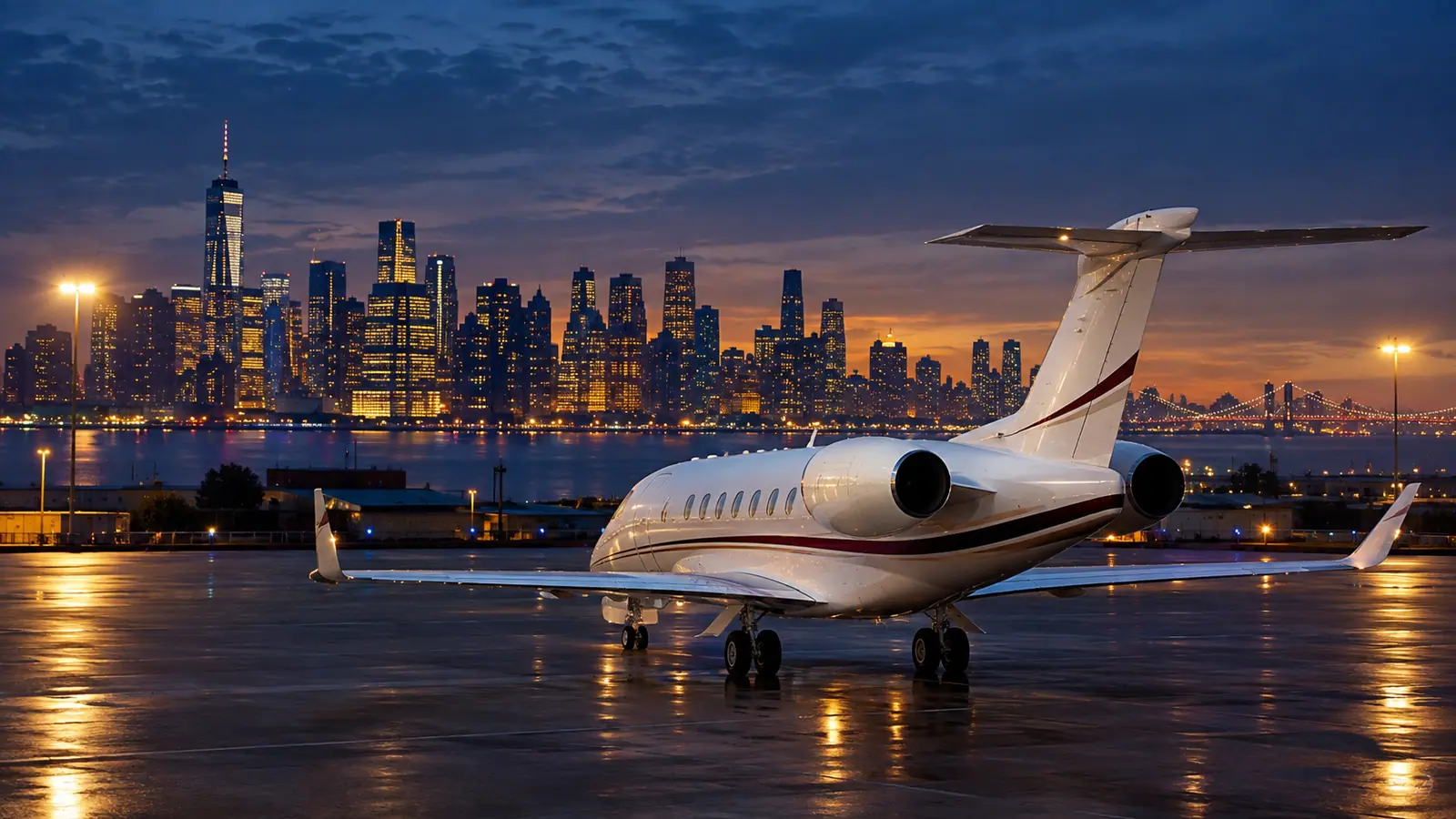
Private jet charters New York
Private jet charters New York travelers book most often run to Miami, Los Angeles and San Francisco. Light jet pricing on those legs ranges from about $10,000 to $37,500. This page explains the airports, the aircraft and what moves the number.
Common routes from New York
The Miami run is the busiest warm-weather leg from New York at 949 nm, and a light jet covers it in 2 hours 37 minutes for an estimated $10,000 to $15,000. New York to Los Angeles is the long transcontinental standard at 2,129 nm, roughly 6 hours 15 minutes in a light jet, and most travelers move up to super-midsize for the cabin comfort. Seattle runs 2,080 nm and San Francisco 2,227 nm, both in the same six-hour neighborhood.
Short legs are where private flying changes the day. A 41 minute flight to Boston replaces a four-hour drive or a long airport process, and Washington at 194 nm is 46 minutes. Seasonal traffic tells its own story: Nantucket at 183 nm and 45 minutes in summer, Jackson Hole at 1,626 nm in ski season, Aspen at 1,503 nm. If your dates are locked to a holiday week, book earlier and expect the estimate to sit at the top of its range.
- Los Angeles → New York6h 15m
- Miami → New York2h 37m
- San Francisco → New York6h 29m
- Washington, DC → New York0h 46m
- Boston → New York0h 41m
- Cleveland → New York1h 10m
- Chicago → New York1h 49m
- Dallas → New York3h 57m
- Houston → New York4h 04m
- Atlanta → New York1h 52m
- Denver → New York4h 29m
- Phoenix → New York5h 34m
- Seattle → New York6h 08m
- Las Vegas → New York5h 46m
- Nashville → New York1h 54m
- Charlotte → New York1h 27m
- New York → Los Angeles6h 15m
- New York → Las Vegas5h 46m
- New York → Miami2h 37m
- New York → San Francisco6h 29m
- New York → Aspen4h 43m
- New York → Nantucket0h 45m
- New York → Boston0h 41m
- New York → Jackson Hole5h 01m
Which aircraft fit your New York trip
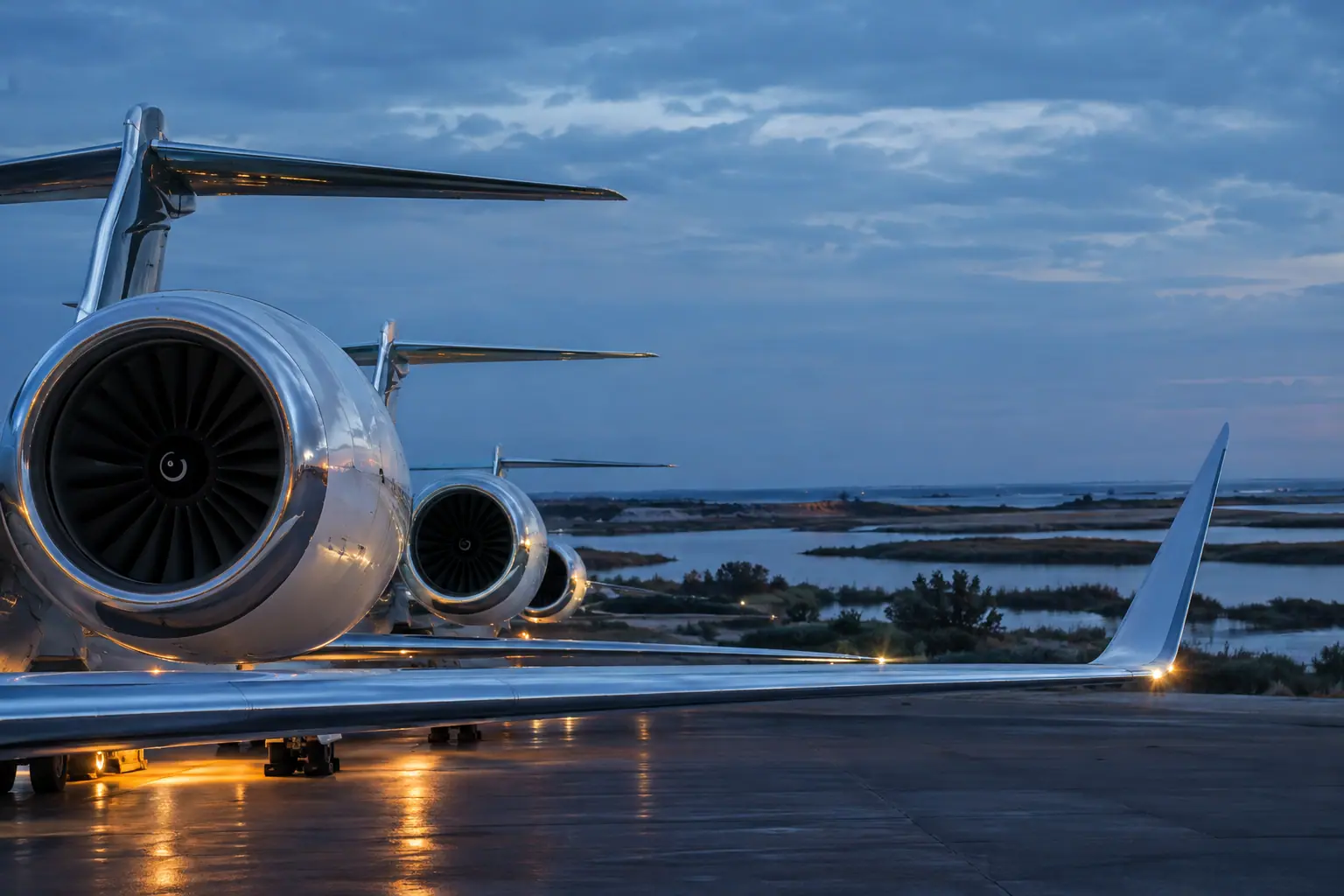
For a 158 nm hop to Boston, a light jet at 430 knots is the right size, carrying 4 to 7 passengers at $4,000 to $6,000. The light jet class has a typical range of 1,400 nm, which covers Chicago, Atlanta, Dallas and Miami without a fuel stop. A turboprop can handle Washington and Boston for 6 to 8 passengers at the lowest hourly rate, cruising near 300 knots.
Anything past 1,400 nm pushes you up a class. Super-midsize jets reach 3,200 nm and seat 8 to 10, which fits Denver, Phoenix and Seattle comfortably. Heavy jets stretch to 4,000 nm for 10 to 14 passengers, and they are the usual choice when the whole party travels with ski or golf gear. Ask how much baggage volume you actually get, not just the seat count.
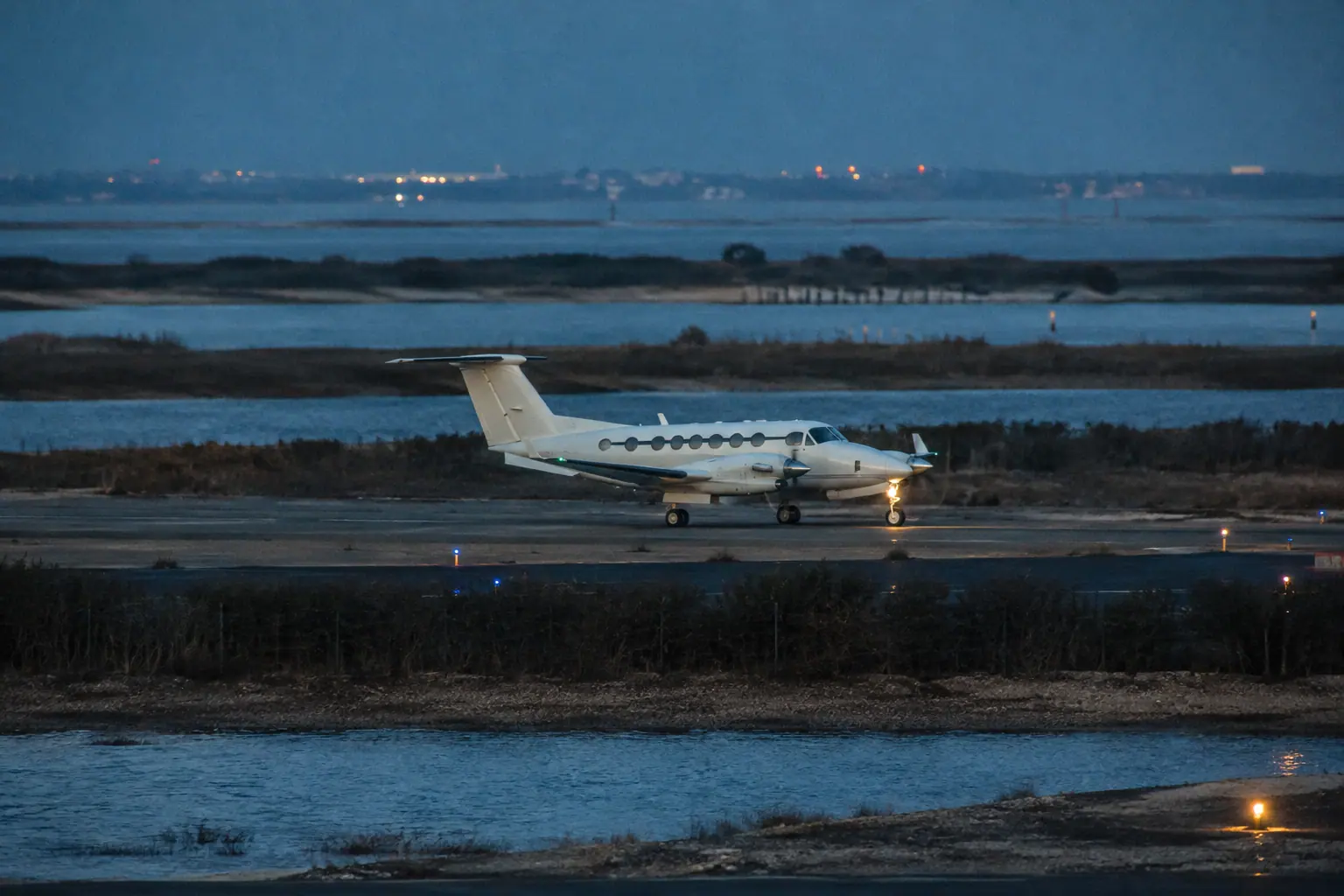
Turboprop
- 6-8 seats
- 300 kt cruise
- 1,500 nm range
Pilatus PC-12 NGX, Daher TBM 960
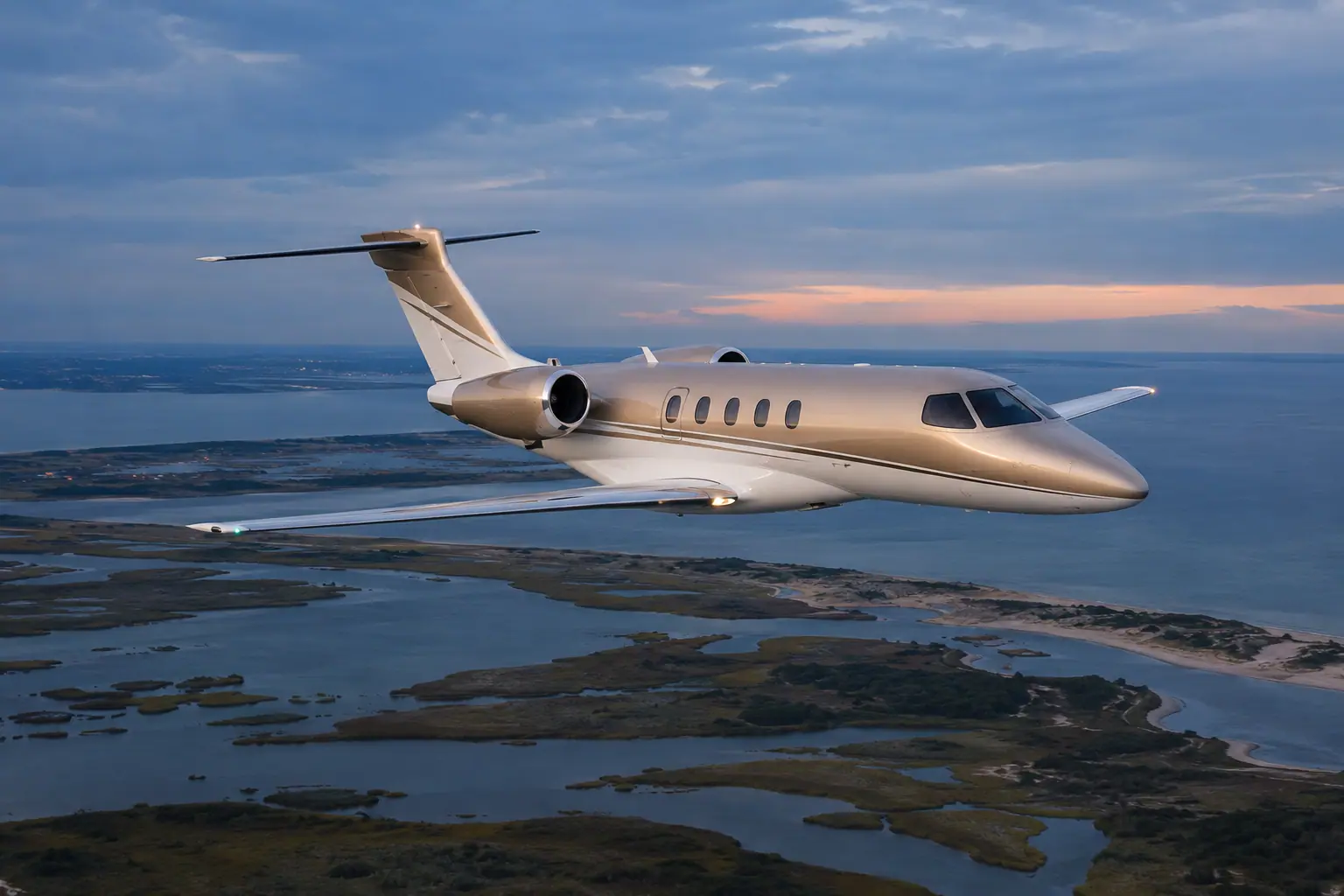
Light jet
- 4-7 seats
- 430 kt cruise
- 1,400 nm range
HondaJet Elite II, Cessna Citation CJ4 Gen2
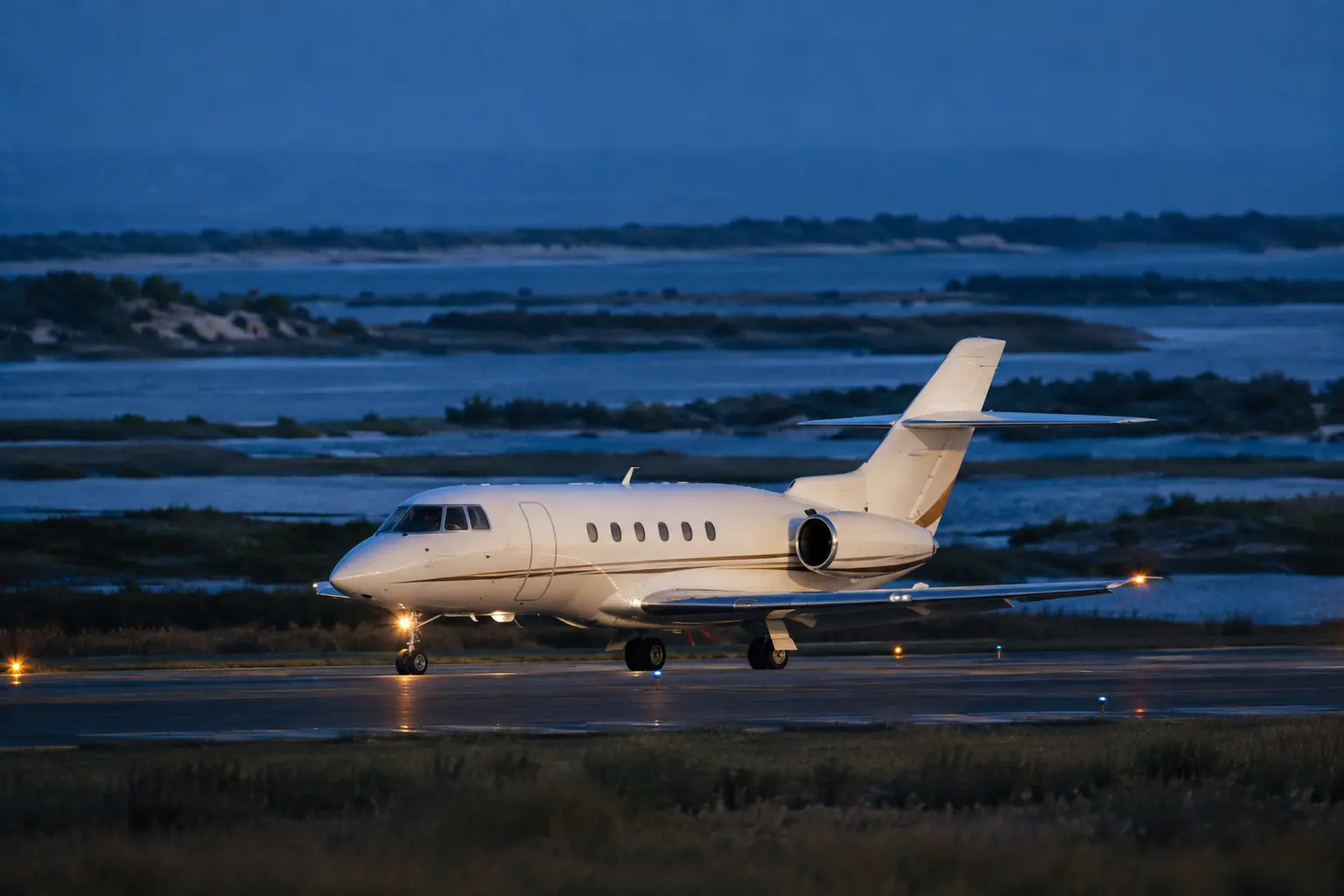
Midsize jet
- 7-9 seats
- 440 kt cruise
- 2,100 nm range
Cessna Citation XLS+, Cessna Citation Latitude
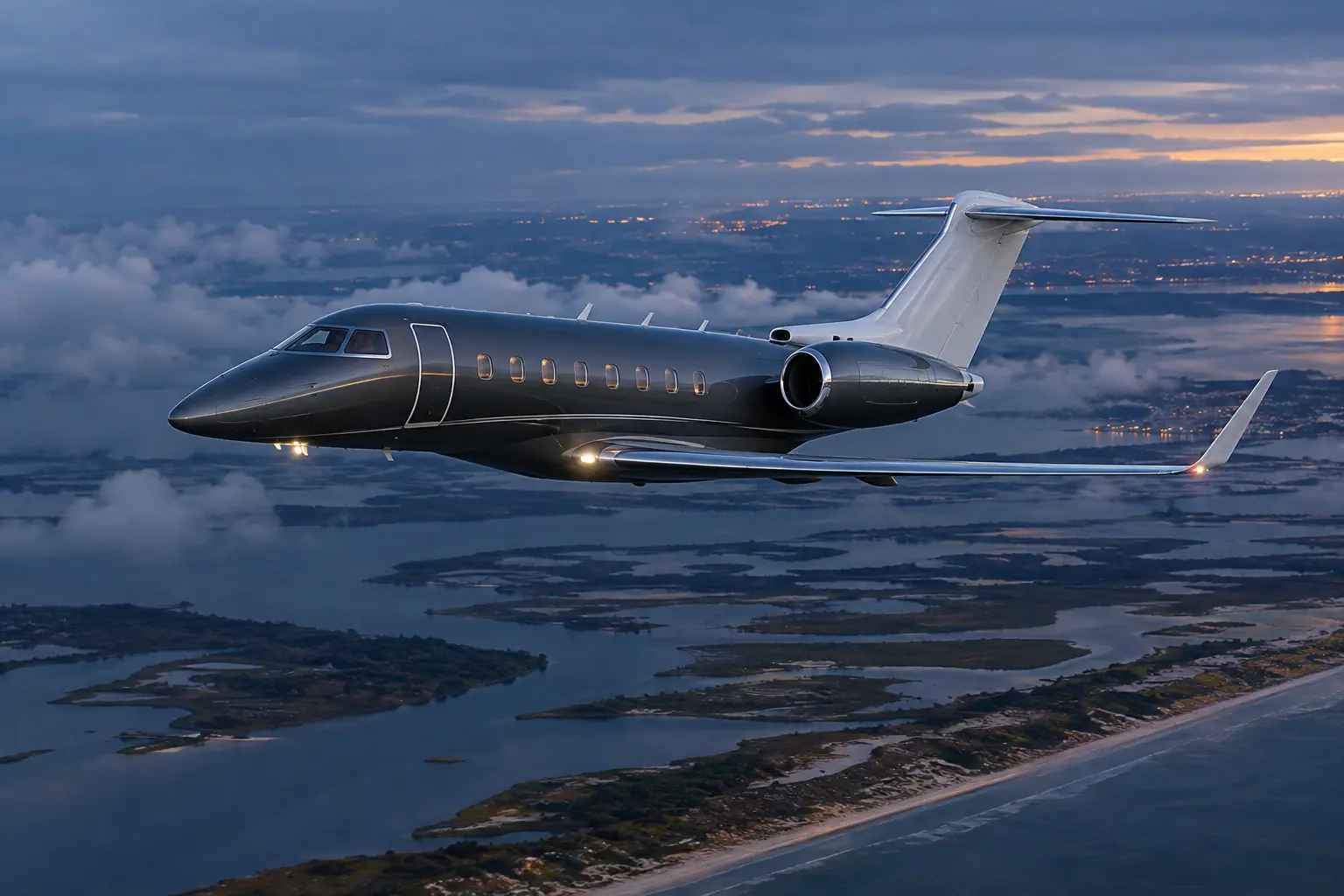
Super-midsize jet
- 8-10 seats
- 470 kt cruise
- 3,200 nm range
Cessna Citation X+, Bombardier Challenger 350
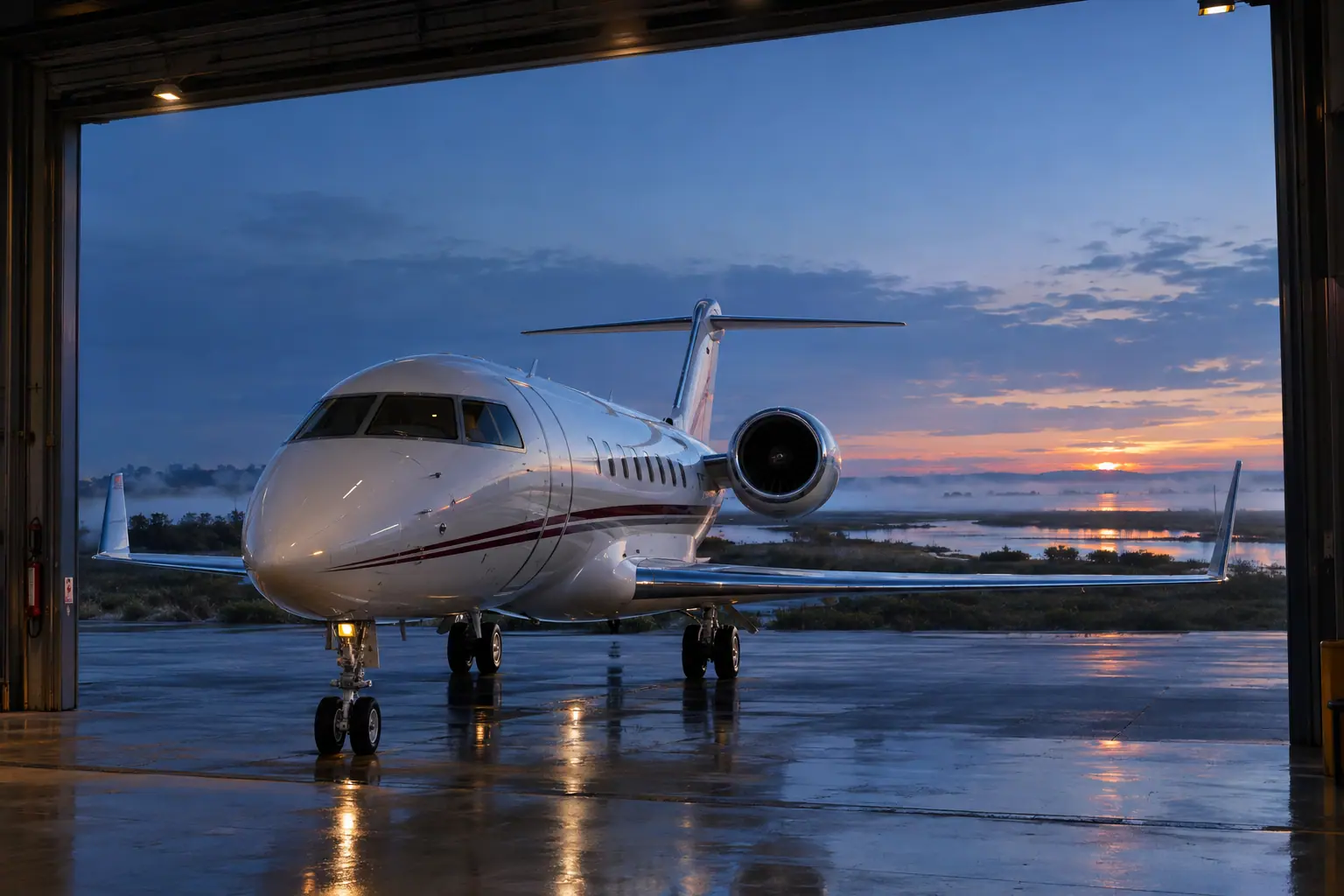
Heavy jet
- 10-14 seats
- 470 kt cruise
- 4,000 nm range
Dassault Falcon 900LX, Gulfstream G450
Private jet charters New York cost
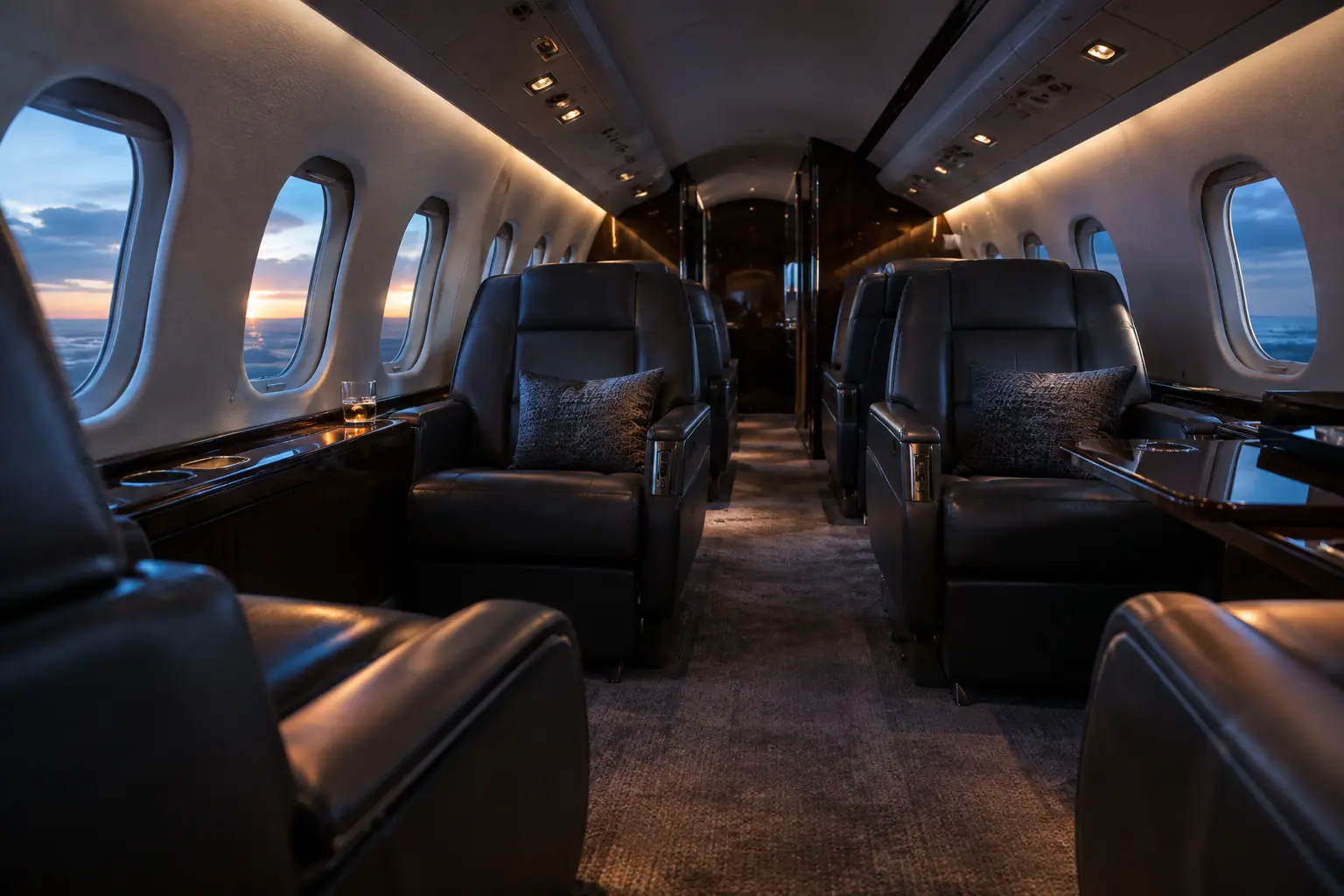
Private jet charters New York pricing depends on distance, aircraft class and how late you book, with light jet estimates starting around $4,000 on the short Boston and Washington runs. Turboprops run $2,200 to $3,500 an hour, light jets $3,800 to $5,800, midsize $5,200 to $7,800, super-midsize $7,200 to $10,000 and heavy jets $9,500 to $14,500. Those are hourly ranges, not quotes; the total also carries landing fees, crew overnight costs and fuel surcharges. Treat every figure here as an estimate and expect the operator's written quote to be the binding one.
A light jet from Miami to New York runs roughly $10,000 to $15,000 across 949 nautical miles in about 2 hours 37 minutes. Go the other way, New York to Los Angeles, and the same class climbs to $23,500 to $36,000 over 2,129 nm and 6 hours 15 minutes. Chartering a midsize jet to Chicago or Atlanta stays near the $7,000 to $11,000 band because the distances are similar. If you can move your departure by a day, empty-leg repositioning occasionally undercuts a retail charter price, though availability is unpredictable and never something to plan around.
| Class | Seats | Est. hourly cost | Los Angeles → New York |
|---|---|---|---|
| Turboprop | 6-8 | $2,200–$3,500 | $18,500–$30,000 |
| Light jet | 4-7 | $3,800–$5,800 | $23,500–$36,000 |
| Midsize jet | 7-9 | $5,200–$7,800 | $32,000–$48,000 |
| Super-midsize jet | 8-10 | $7,200–$10,000 | $36,500–$50,500 |
| Heavy jet | 10-14 | $9,500–$14,500 | $48,000–$73,500 |

Airports for New York charters
Four airports handle most of this traffic, and the choice affects both your drive and the aircraft that can operate the leg. Teterboro sits closest to Manhattan and carries the widest FBO choice; Morristown is a short run farther west; LaGuardia and Newark are the airline fields, useful when a passenger needs to connect.
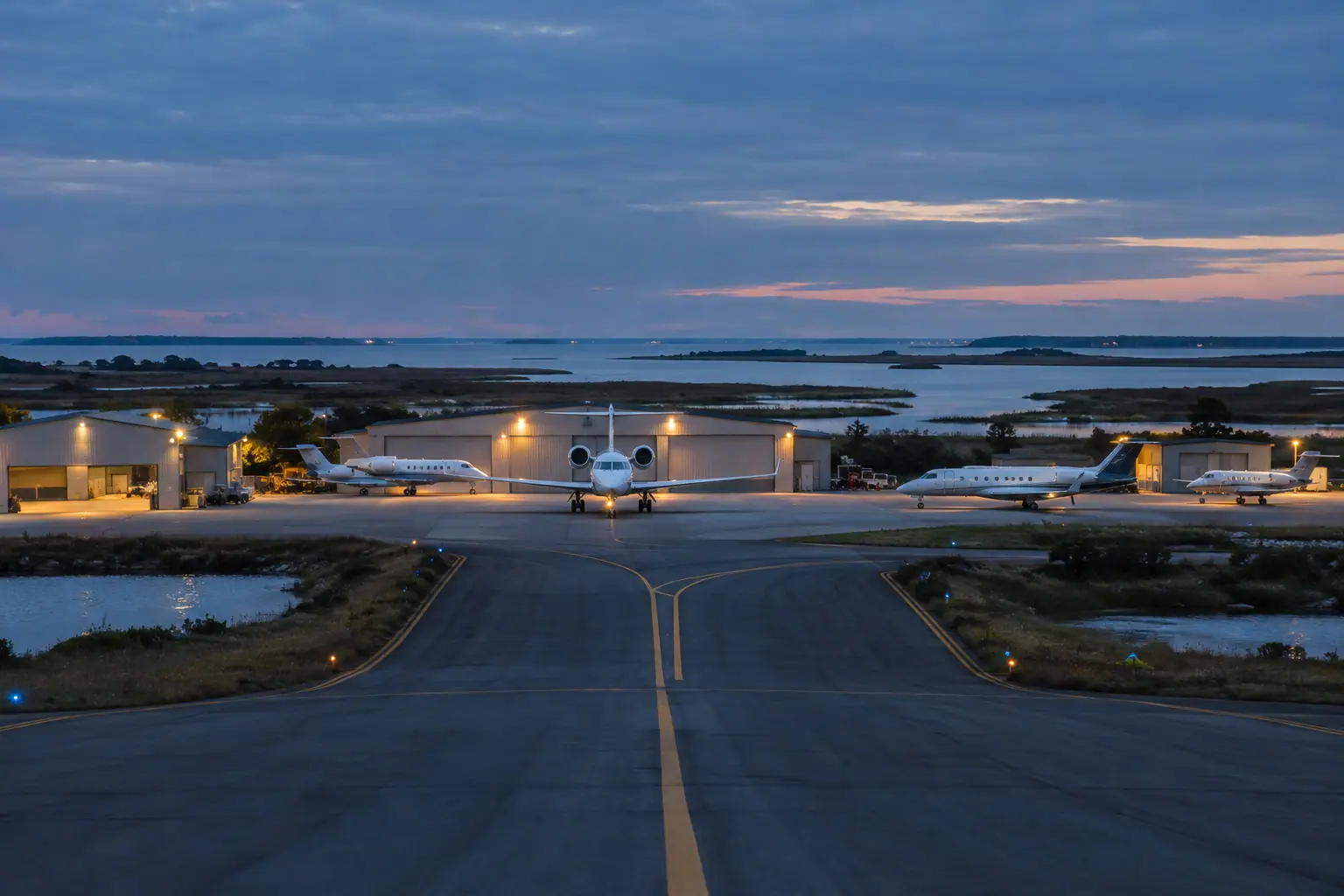
Teterboro Airport
- KTEB ICAO
- 6,997 ft runway
- 10 mi to Manhattan
Teterboro is the default for Manhattan-bound travelers, 9 feet above sea level with a 6,997 foot runway and four FBOs: Jet Aviation, Signature Aviation East, Atlantic Aviation and Signature Aviation West. Its July density altitude sits near 1,700 feet, rising to roughly 2,300 feet on a 115F afternoon, which matters for heavy jets on hot days but rarely limits light aircraft. Ground handling is quick because there is no airline terminal to cross. Book slots early for holiday departures and the Thursday-afternoon return rush.
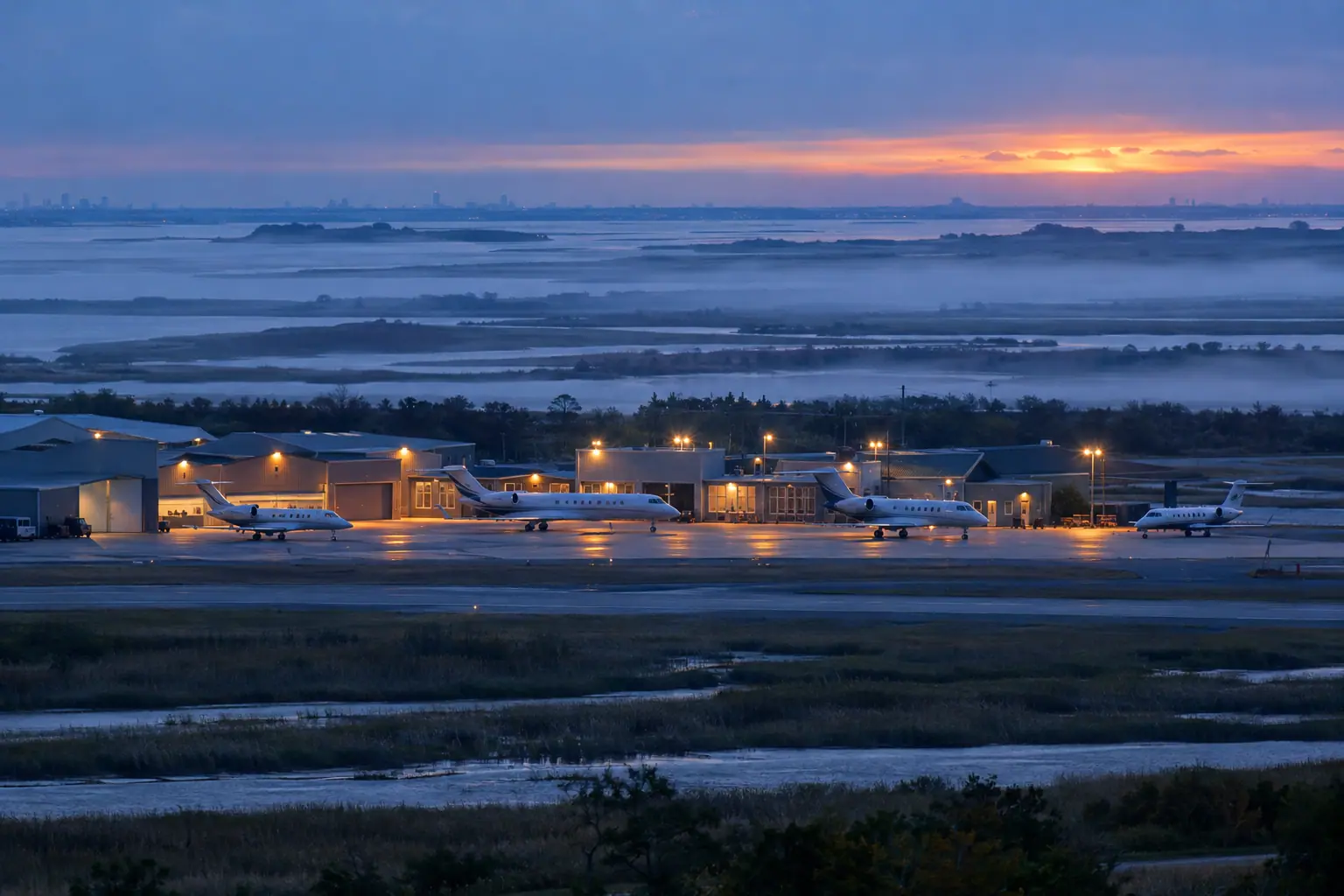
Morristown Municipal Airport
- KMMU ICAO
- 5,998 ft runway
- 22 mi to Manhattan
Morristown Municipal sits at 187 feet with a 5,998 foot runway and two FBOs, Atlantic Aviation and Signature Aviation. It is the quieter alternative when Teterboro slot pressure builds, and the drive into Manhattan is longer but predictable via Interstate 80. Density altitude reaches about 2,000 feet in a typical July and 2,500 feet at 115F, the highest of the four fields. That is still workable for most classes, but heavy jets on the hottest afternoons may see payload limits worth discussing with the operator.
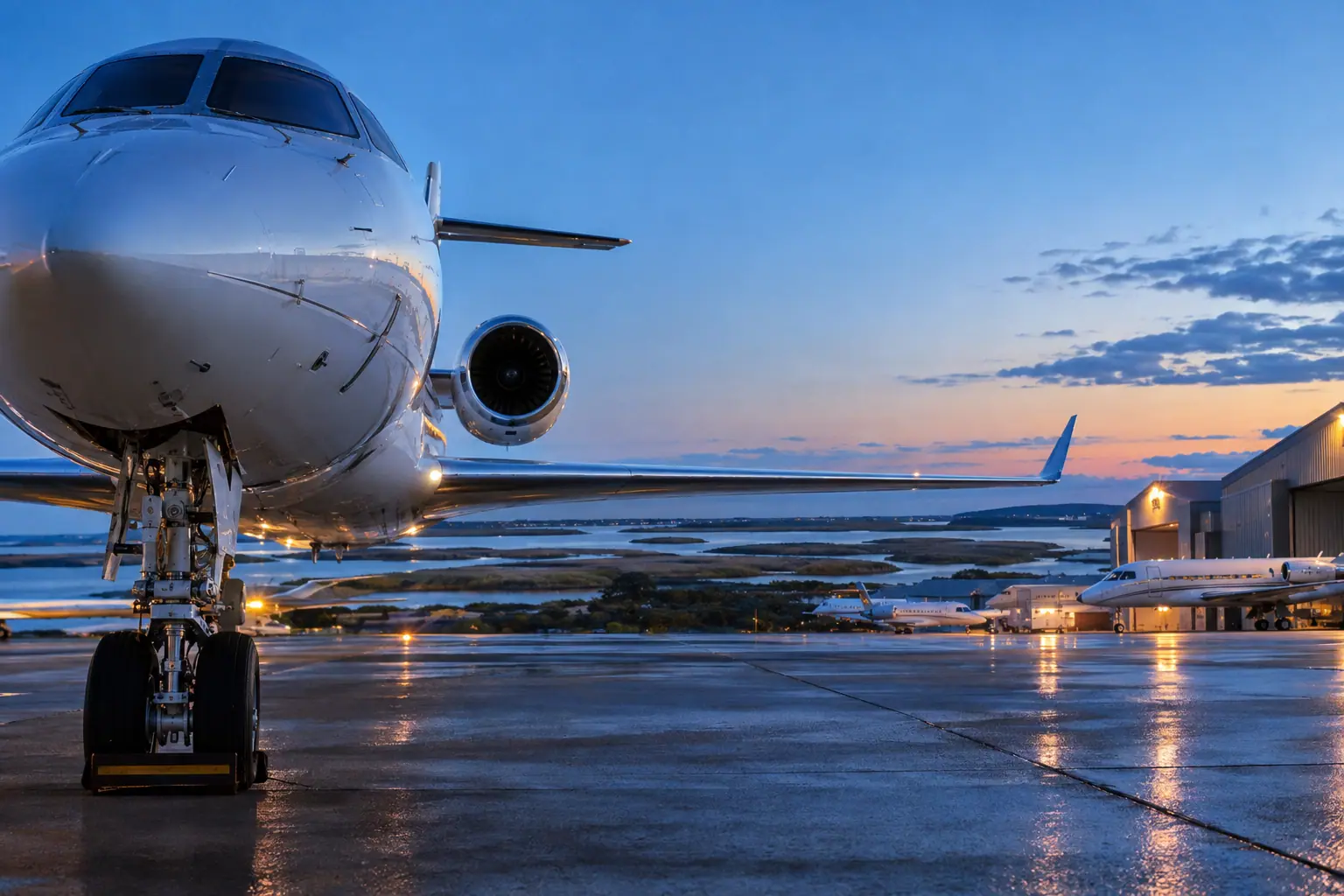
LaGuardia Airport
- KLGA ICAO
- 7,002 ft runway
- 8 mi to Manhattan
LaGuardia sits at 21 feet with a 7,002 foot runway and no dedicated FBOs, so general aviation movements are constrained by airline schedules and slot rules. Most charter operators avoid it for that reason. It earns its place when a passenger connects to a commercial flight or when the destination is Queens or Long Island and the shorter drive justifies the flexibility loss. July density altitude runs near 1,800 feet.
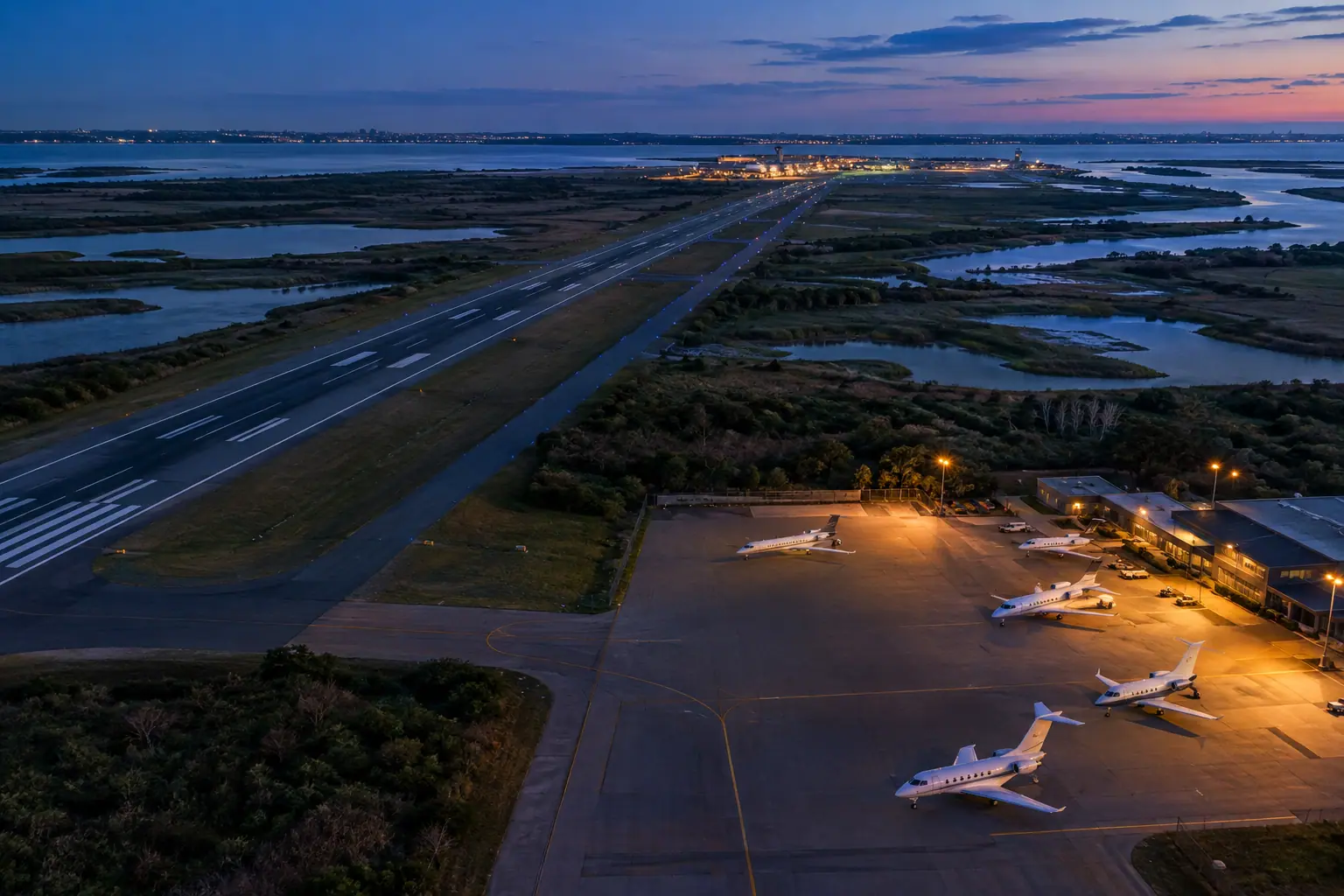
Newark Liberty International Airport
- KEWR ICAO
- 11,000 ft runway
- 9 mi to Manhattan
Newark Liberty is the long-runway option at 11,000 feet and 18 feet elevation, which helps on hot days and for heavy aircraft on long transcontinental legs. Like LaGuardia, it is an airline field without FBOs, so handling is arranged through the operator. Density altitude sits around 1,800 feet in July and about 2,300 feet at 115F. Use it when runway length or airline connections matter more than a quick departure.
Weather and seasonal demand
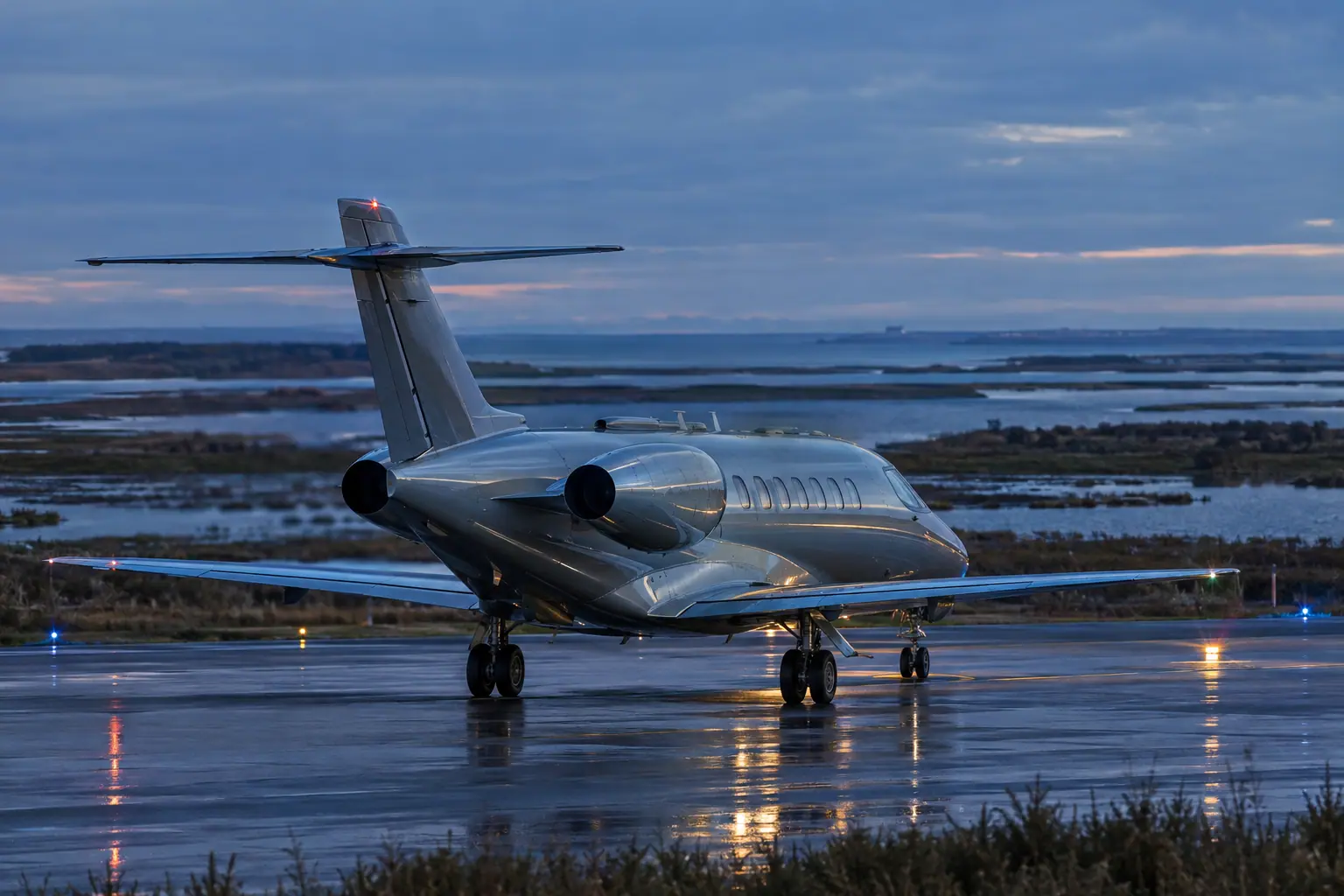
Summer heat is the real performance factor. A July afternoon at Teterboro puts density altitude near 1,700 feet, and a 115F day pushes it to about 2,300 feet, which trims climb performance and can reduce how much a heavy jet carries out of a short runway. If you are flying a full heavy jet west on an August afternoon, plan the fuel stop or shift to Newark's 11,000 foot runway.
Wet days cluster through the year, from nine in October and November to thirteen in July, so thunderstorm delays in summer are routine rather than exceptional. Winter brings its own pattern: de-icing queues before a morning departure and the occasional nor'easter that reshuffles everything for a day. When a storm system crosses the Northeast, build a two-hour buffer into the car service rather than assuming the schedule holds.
| Month | Mean peak | Wet days | KTEB DA | KMMU DA | KLGA DA |
|---|---|---|---|---|---|
| Jan | 40°F | 10 | -1,300 ft | -1,000 ft | -1,200 ft |
| Feb | 43°F | 10 | -1,100 ft | -800 ft | -1,000 ft |
| Mar | 49°F | 10 | -700 ft | -400 ft | -600 ft |
| Apr | 60°F | 12 | 100 ft | 300 ft | 100 ft |
| May | 70°F | 11 | 700 ft | 1,000 ft | 800 ft |
| Jun | 79°F | 11 | 1,300 ft | 1,600 ft | 1,400 ft |
| Jul | 85°F | 13 | 1,700 ft | 2,000 ft | 1,800 ft |
| Aug | 83°F | 12 | 1,600 ft | 1,800 ft | 1,600 ft |
| Sep | 77°F | 10 | 1,200 ft | 1,400 ft | 1,200 ft |
| Oct | 66°F | 9 | 500 ft | 700 ft | 500 ft |
| Nov | 54°F | 9 | -300 ft | -100 ft | -300 ft |
| Dec | 45°F | 11 | -900 ft | -700 ft | -900 ft |
Rain days count 1 mm or more. Density altitude uses the mean afternoon peak and a rule-of-thumb formula. Operators rely on their own performance figures.

When to book and what moves the price
Demand peaks around the major holidays, the September UN General Assembly week, and the summer Fridays when the Hamptons and Nantucket traffic spikes. Booking a New York to Nantucket flight two to three weeks out gives you a better choice of aircraft than calling the day before, when the remaining options sit at the top of the range. If your trip is tied to an event date, lock the aircraft first and the ground arrangements second.
Off-season travel is where flexibility pays. Late January and early February are the quietest weeks on the calendar, and midweek departures generally quote lower than Friday afternoons. If your plans can float by a day or two, the estimate often lands nearer the low end of the published range for that route. Ask specifically about repositioning charges, since a one-way request can carry the cost of the aircraft's return.