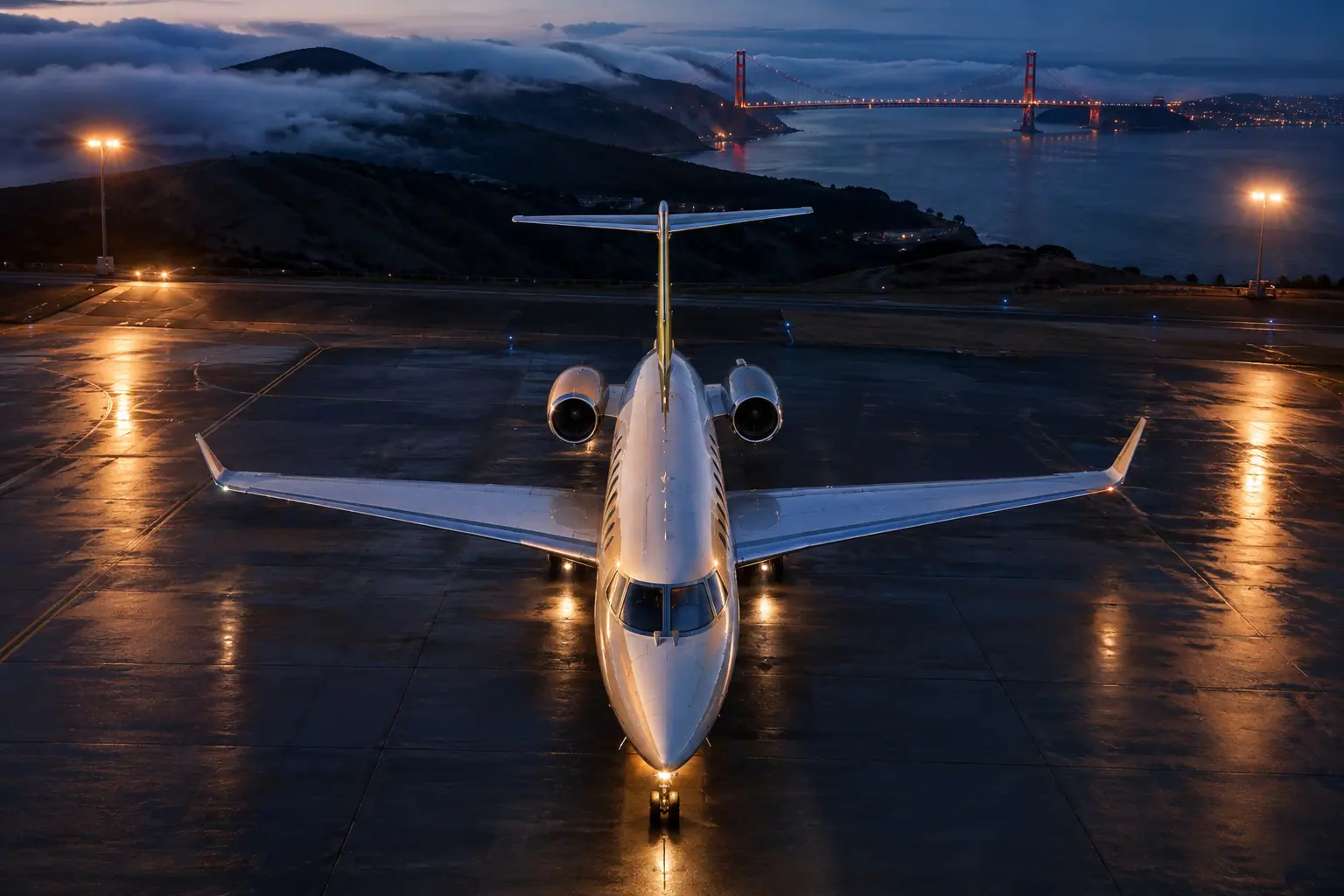
Private jet charter San Francisco to New York
Private jet charter San Francisco to New York covers 2,227 nautical miles. A super-midsize jet flies it nonstop in 5h 17m with nine seats. This page explains costs and the best New York arrival airports.
- 2,227 nm2,563 statute miles
- 5h 17msuper-midsize jet of flight
- $38,000–$53,000estimate, one-way
San Francisco to New York jet pricing by aircraft type
A private jet from San Francisco to New York flies 2,227 nautical miles in 5h 17m aboard a super-midsize jet, with a one-way estimate of $38,000–$53,000.Below are the five classes that can make this run, with nonstop status, block time and estimated one-way pricing drawn from current market rates. A light jet and a midsize jet will stop for fuel; a super-midsize and a heavy jet fly it without a stop. Prices are estimates, not quotes, and they move with demand, crew duty and the specific tail number. The distance is 2,227 nautical miles, so the fuel stop is a real factor for the smaller classes.
| Aircraft class | Flight time | One-way estimate | Notes |
|---|---|---|---|
| Turboprop | 8h 51m | $19,500–$31,000 | Fuel stop likely |
| Light jet | 6h 29m | $24,500–$37,500 | Fuel stop likely |
| Midsize jet | 6h 22m | $33,000–$49,500 | Fuel stop likely |
| Super-midsize jet | 5h 17m | $38,000–$53,000 | Optimal choice |
| Heavy jet | 5h 17m | $50,000–$76,500 | Nonstop |
Estimates are per aircraft, not per seat, before federal excise tax and segment fees. Block time covers taxi, climb and descent.
Why a super-midsize jet fits this trip
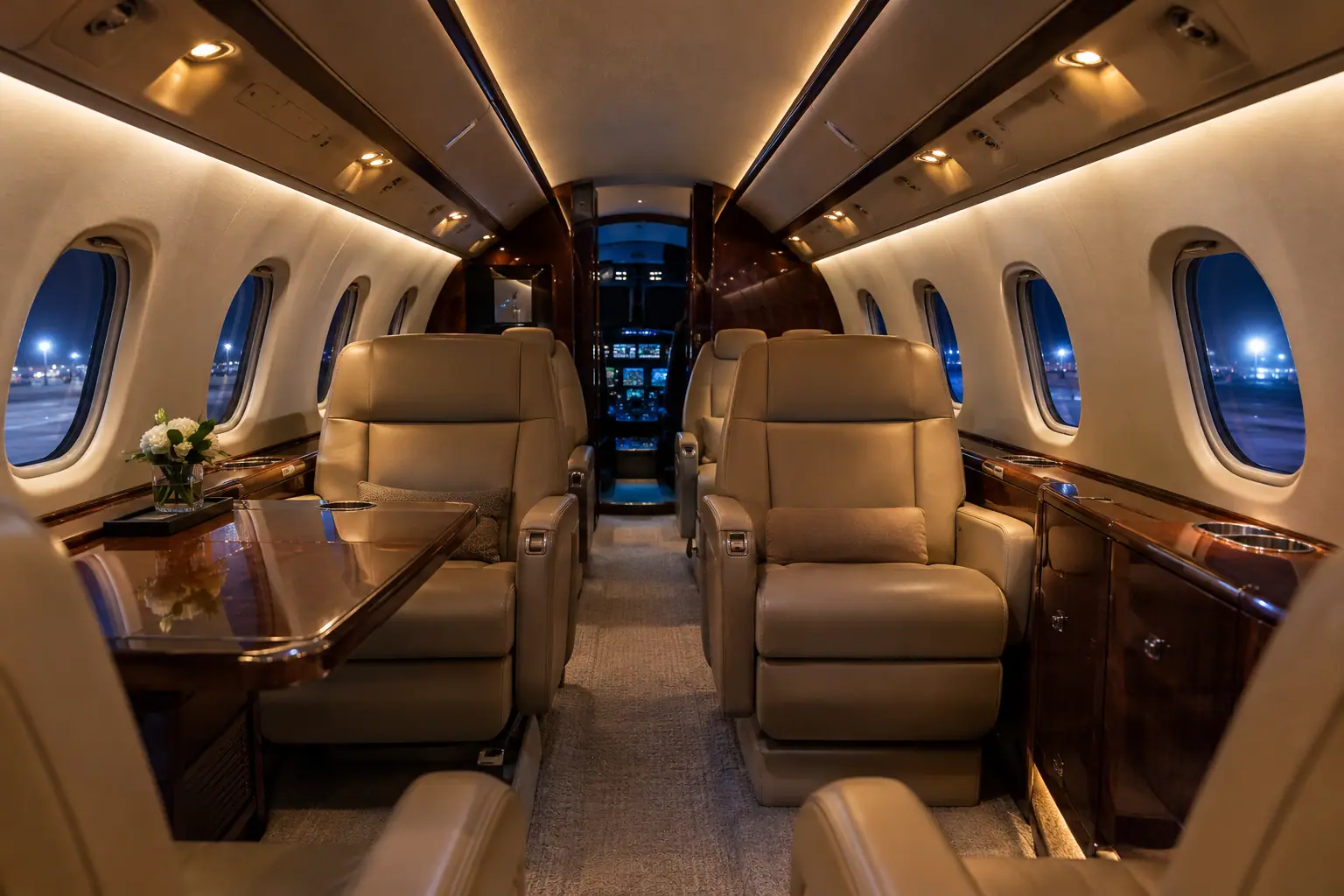
A super-midsize jet is the practical fit for a 2,227 nm leg. It flies nonstop in 5h 17m and carries nine in a 6 ft 3 in tall cabin in the Gulfstream G280, with 154 cu ft of baggage, so ski bags and golf clubs come along. A heavy jet matches that 5h 17m time but starts around $50,000, and unless you need a stand-up cabin or more seats, the extra spend rarely pays for itself on this route. A light or midsize jet will save on the front end, but the fuel stop stretches the day to over six hours in the air and adds a second landing and takeoff cycle. If your schedule is tight, then the nonstop super-midsize is the only class that keeps a same-day meeting feasible.
Chain a San Francisco morning departure to a New York close-of-business meeting, then turn around the next morning, and the nonstop advantage compounds. One wing on a super-midsize keeps the schedule intact. A turboprop sits at 8h 51m with a stop both ways, which is a full day each direction. If your party is larger than nine, then look at heavy jets for the extra cabin volume and seats. The trade-off is straightforward: you pay for cabin volume and nonstop capability, and on this distance the nonstop capability is the part that matters.
Empty legs price lower than point-to-point charters when an operator needs to reposition a super-midsize out of the Bay Area or needs to bring one back to New York. Those legs appear on short notice; if you are flexible by a day, ask about them. When an empty leg aligns with your dates, then you can save significantly on the one-way price. As a charter broker, we act as your agent under DOT Part 295 rules, and the flight itself is handled by an FAA Part 135 operator.
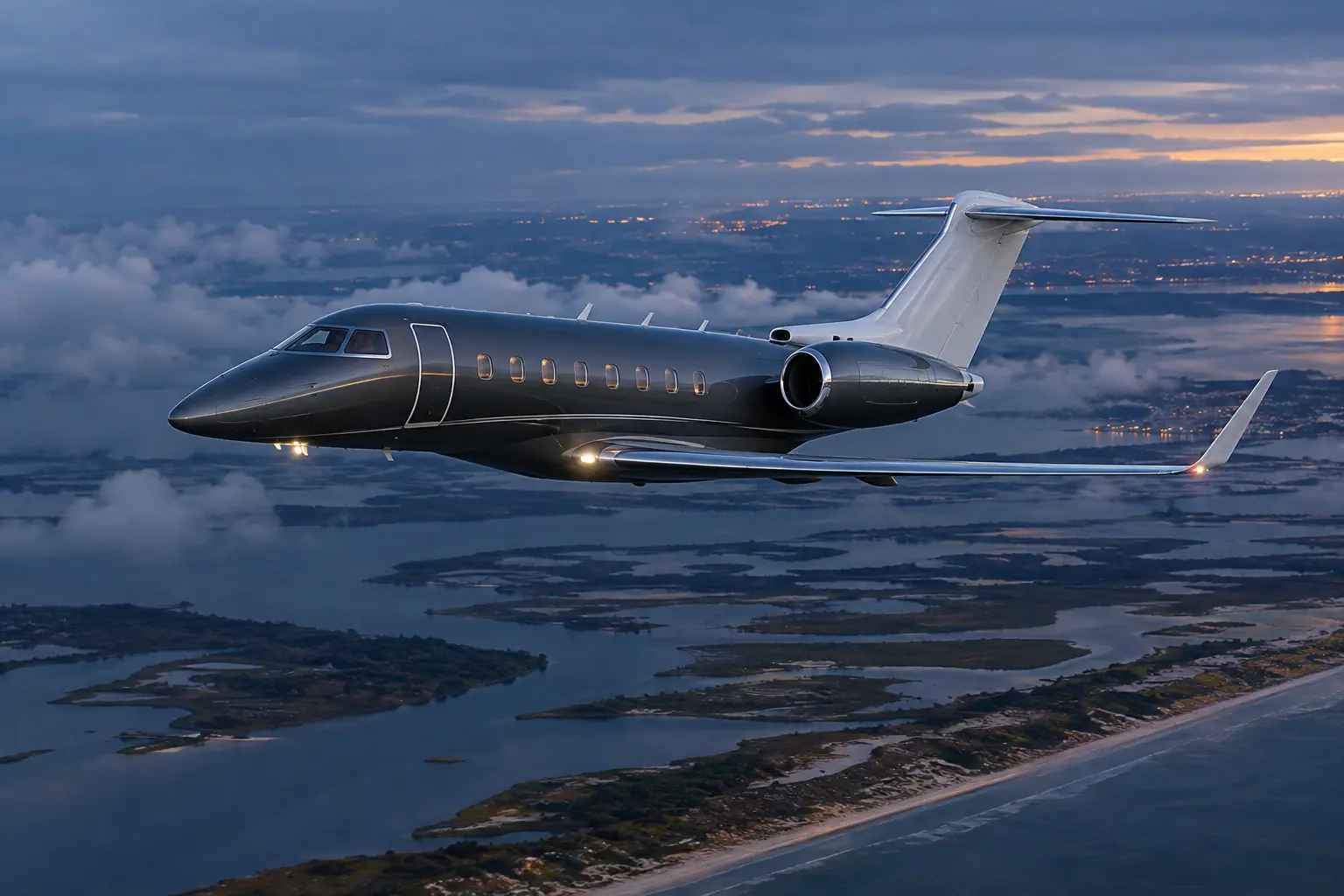
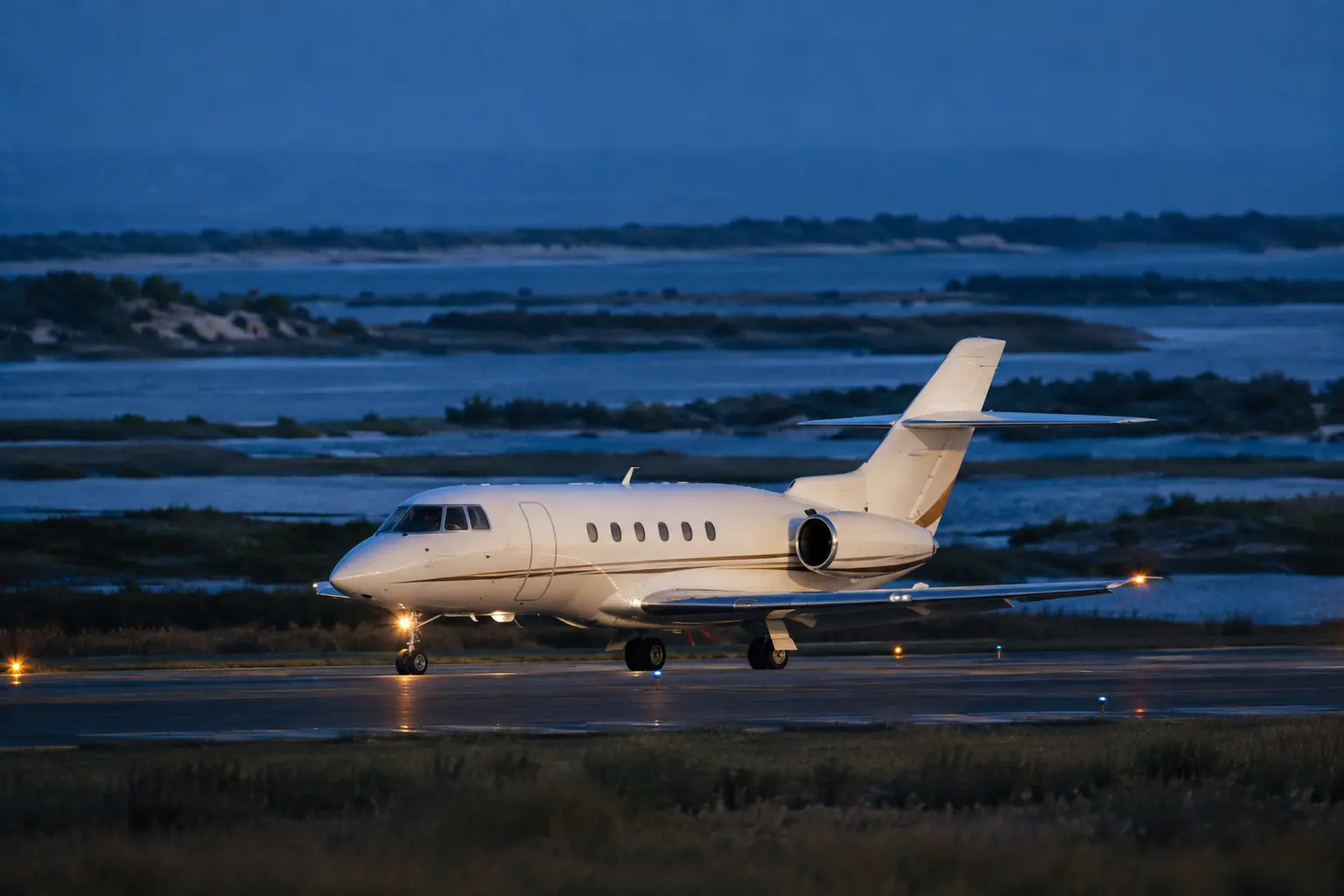
Cessna Citation X+
- 9 seats
- 527 kt cruise
- 3,460 nm range
Cabin 5 ft 8 in tall, 25 ft 2 in long. Baggage 82 cu ft.
Bombardier Challenger 350
- 10 seats
- 470 kt cruise
- 3,200 nm range
Cabin 6 ft tall, 25 ft 2 in long. Baggage 106 cu ft.
Leaving San Francisco
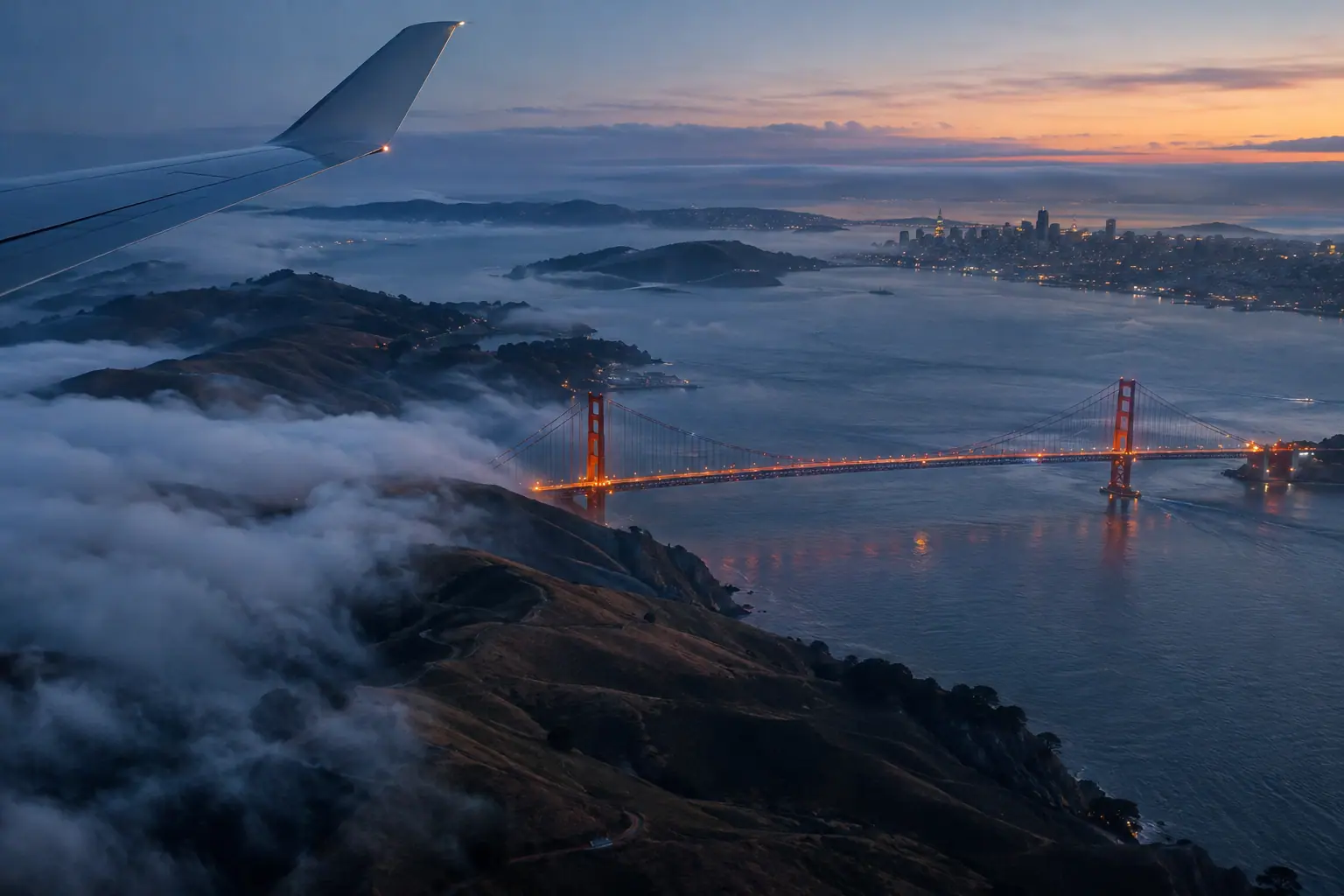
San Francisco International (KSFO) has an 11,870 ft runway and is the usual departure point for a super-midsize jet heading east with a full load of passengers and bags. Oakland San Francisco Bay (KOAK) offers a 10,520 ft runway and is often quicker to reach from the East Bay. From the East Bay, Oakland often means less terminal traffic on the general aviation side.
FBO choice comes down to where your car can get you and what the crew needs for the leg. Both airports handle private flights routinely from their business aviation facilities. If you are coming from the North Bay, then allow extra drive time to either airport during commute hours.
Arriving in New York
Teterboro (KTEB) has a 6,997 ft runway and sits closest to Manhattan, about 12 miles from Midtown. Morristown Municipal (KMMU) has a 5,998 ft runway and serves northern New Jersey well. Both Teterboro and Morristown are the standard general aviation gateways for a super-midsize jet with a nine-passenger load.
LaGuardia (KLGA) has a 7,002 ft runway and puts you on the Queens side of the East River, useful for meetings in Midtown or along the Long Island corridor. Newark Liberty (KEWR) offers an 11,000 ft runway and is a good option for a New Jersey-side arrival. If your first stop is in Manhattan, then Teterboro usually gives the shortest drive. On any given day, the right choice depends on where in the region your first stop sits and what the ramp looks like.
| Airport | Code | Runway |
|---|---|---|
| San Francisco International Airport | KSFO / SFO | 11,870 ft |
| Oakland San Francisco Bay Airport | KOAK / OAK | 10,520 ft |
| Teterboro Airport | KTEB / TEB | 6,997 ft |
| Morristown Municipal Airport | KMMU / MMU | 5,998 ft |
| LaGuardia Airport | KLGA / LGA | 7,002 ft |
| Newark Liberty International Airport | KEWR / EWR | 11,000 ft |
Timing and booking ahead
Demand on this route peaks around the winter holidays and in late September, when finance and technology calendars converge on New York. Summer is steadier but fills up for Friday-afternoon eastbound departures. For holiday weeks, book a super-midsize 10 to 14 days ahead to have real choices. Shorter lead times mean fewer tail numbers and less negotiating room on price.
If your dates are flexible, ask whether an empty leg is available on the reverse direction out of New York. A same-day round trip on a super-midsize jet works only if you book both legs together, because the aircraft waits or repositions at your expense. When your meeting will run past the crew's duty limit, then plan an overnight on the ground and fly back the next morning; the cost of a hotel is usually less than the cost of a second repositioning.
Other legs like San Francisco to New York
The 6 city pairs here span 1,234 to 2,129 nautical miles, with one-way super-midsize jet estimates between $22,000 and $50,500.
Questions on this leg
What does private jet charter San Francisco to New York cost in 2026?
Estimates run from $38,000 to $53,000 one way on a super-midsize jet, the class that flies the route nonstop in 5h 17m. A heavy jet runs $50,000 to $76,500 for the same time but more cabin. Light jets start around $24,500 but make a fuel stop. Prices are estimates, so request a quote with your actual dates.
Can a light jet fly from San Francisco to New York nonstop?
No. At 2,227 nautical miles, this leg exceeds the unrefueled range of most light and midsize jets, so they make one stop. That puts the light jet at 6h 29m total time and the midsize at 6h 22m, both with a fuel stop. A super-midsize or heavy jet covers it nonstop in 5h 17m.
Which New York airport do private jets use from San Francisco?
Teterboro (KTEB) is the most common choice for Manhattan, with a 6,997 ft runway and a short drive into Midtown. Morristown (KMMU) is a northern New Jersey alternative with a 5,998 ft runway. LaGuardia (KLGA) and Newark Liberty (KEWR) both handle private flights and offer 7,002 ft and 11,000 ft runways respectively.
How long is the flight from San Francisco to New York on a super-midsize jet?
Plan on 5h 17m of block time nonstop. Westbound legs often run longer because of headwinds, and eastbound can be faster with tailwinds. The distance is 2,563 miles or 2,227 nautical miles. Actual flight time will vary with the day's winds, routing and traffic on arrival into the New York airspace.
How far ahead should I book a private jet from San Francisco to New York?
For holiday weeks, 10 to 14 days is a reasonable minimum; fewer aircraft are available and prices firm up. For other periods, three to seven days usually gives enough choice among super-midsize and heavy jets. Empty legs can appear inside 48 hours, so a last-minute call is worth making if your schedule is flexible.
Who is responsible for operating a private flight from San Francisco to New York?
The operating company holds a FAA Part 135 certificate and has operational control, including crew and maintenance. As the booking agent, we arrange the flight; we do not own or operate the aircraft. DOT Part 295 rules apply to charter brokers. On domestic legs no passport is needed, and TSA screening applies only to certain programs.