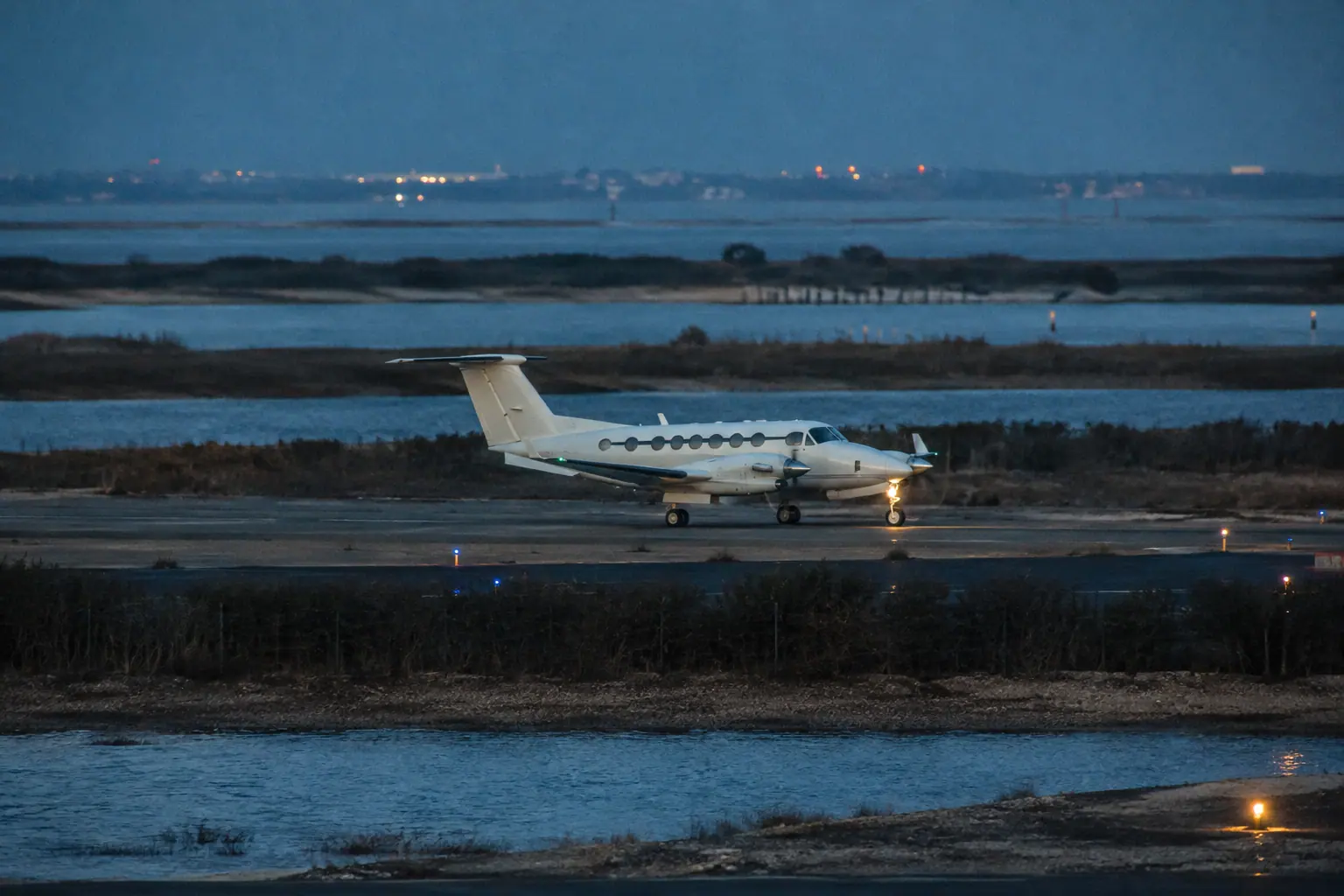
Private jet charter New York to Boston
A private jet charter New York to Boston covers 158 nautical miles nonstop. A light jet makes the trip in about 41 minutes for an estimated $4,000 to $6,000. Here is how the airports, aircraft and timing work.
- 158 nm182 statute miles
- 0h 51mturboprop of flight
- $2,000–$3,500estimate, one-way
New York to Boston jet pricing by aircraft type
A private jet from New York to Boston flies 158 nautical miles in 0h 51m aboard a turboprop, with a one-way estimate of $2,000–$3,500.The trip is short enough that aircraft class matters less than access and schedule. Every option below is nonstop, so the real differences are door-to-door time, cabin comfort and price. The estimates reflect typical one-way charter pricing and move with demand, repositioning and crew day. Treat them as planning ranges, then request a live quote for your dates.
| Aircraft class | Flight time | One-way estimate | Notes |
|---|---|---|---|
| Turboprop | 0h 51m | $2,000–$3,500 | Optimal choice |
| Light jet | 0h 41m | $4,000–$6,000 | Nonstop |
| Midsize jet | 0h 41m | $5,000–$8,000 | Nonstop |
| Super-midsize jet | 0h 39m | $7,000–$10,000 | Nonstop |
| Heavy jet | 0h 39m | $9,500–$14,500 | Nonstop |
Estimates are per aircraft, not per seat, before federal excise tax and segment fees. Block time covers taxi, climb and descent.
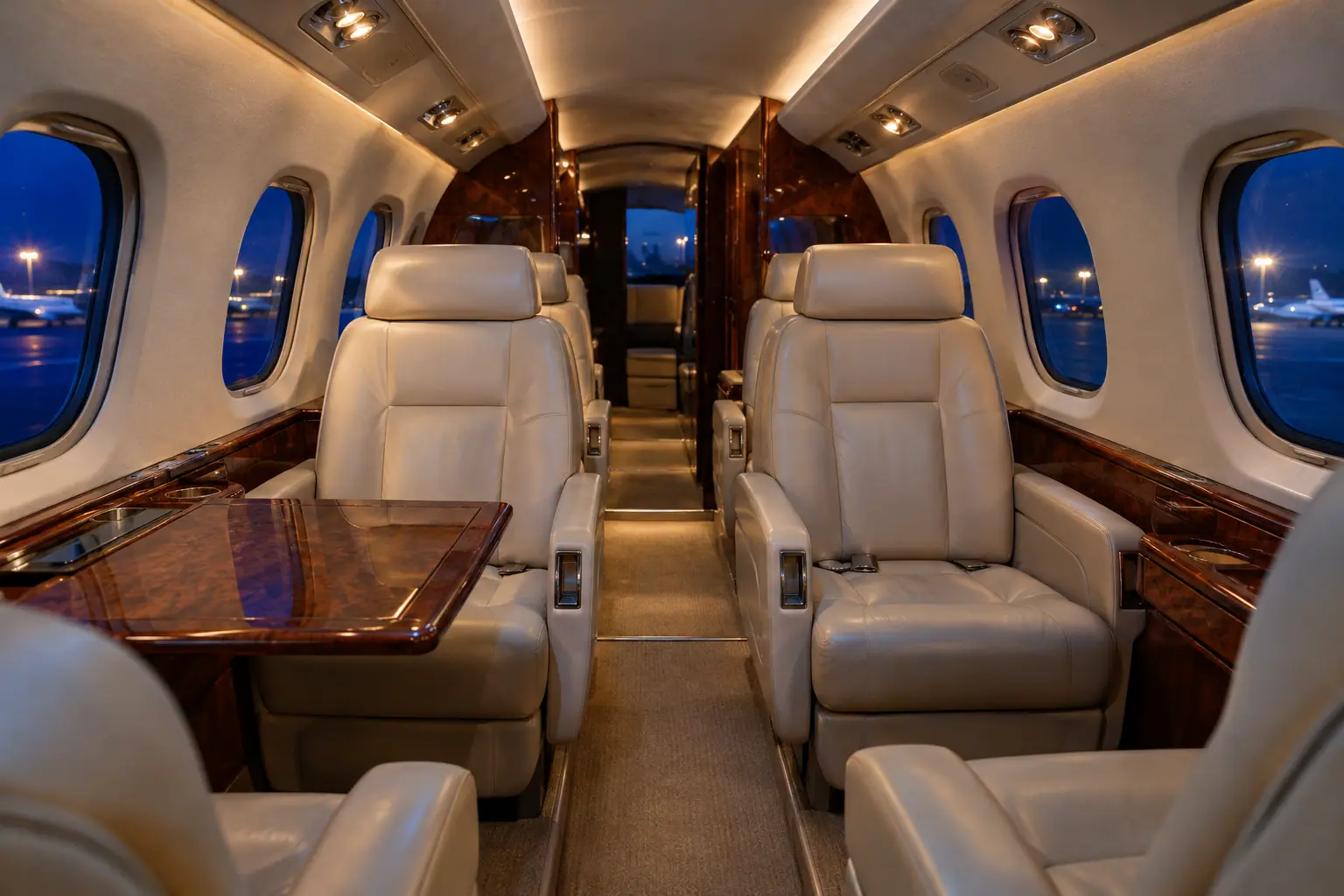
Why a turboprop fits this trip
On a 158-nautical-mile hop, a turboprop is the sensible default. The Beechcraft King Air 350i and Pilatus PC-12 NGX fly New York to Boston in about 51 minutes from Teterboro or Morristown, landing at Hanscom Field well outside Logan's traffic. The King Air seats 8 with 55 cubic feet of baggage; the PC-12 seats 6. Fuel burn is low, so this is the least expensive class on the route, and the time penalty against a jet is roughly ten minutes.
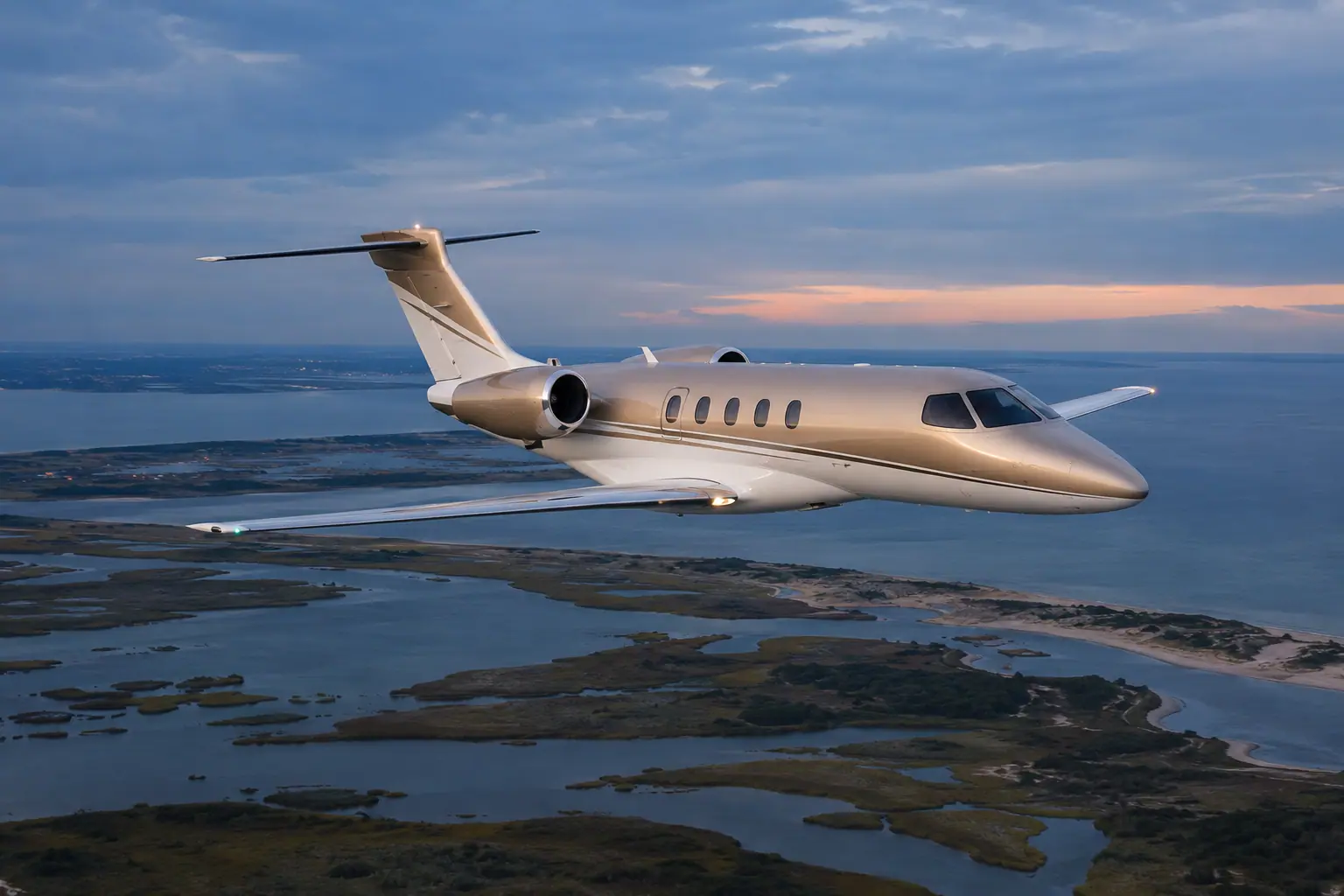
A light jet cuts the trip to about 41 minutes and starts around $4,000, which buys speed and a quieter cabin over the turboprop. Midsize and super-midsize aircraft shave only a couple of minutes more on a sector this short and mainly add cabin height and baggage space. A heavy jet at $9,500 and up makes sense only when the group or the luggage demands it, not for the distance itself.
Pilatus PC-12 NGX
- 6 seats
- 290 kt cruise
- 1,800 nm range
Cabin 4 ft 10 in tall, 16 ft 11 in long. Baggage 40 cu ft.
Daher TBM 960
- 6 seats
- 330 kt cruise
- 1,730 nm range
Cabin 4 ft tall, 13 ft 3 in long. Baggage 32 cu ft.
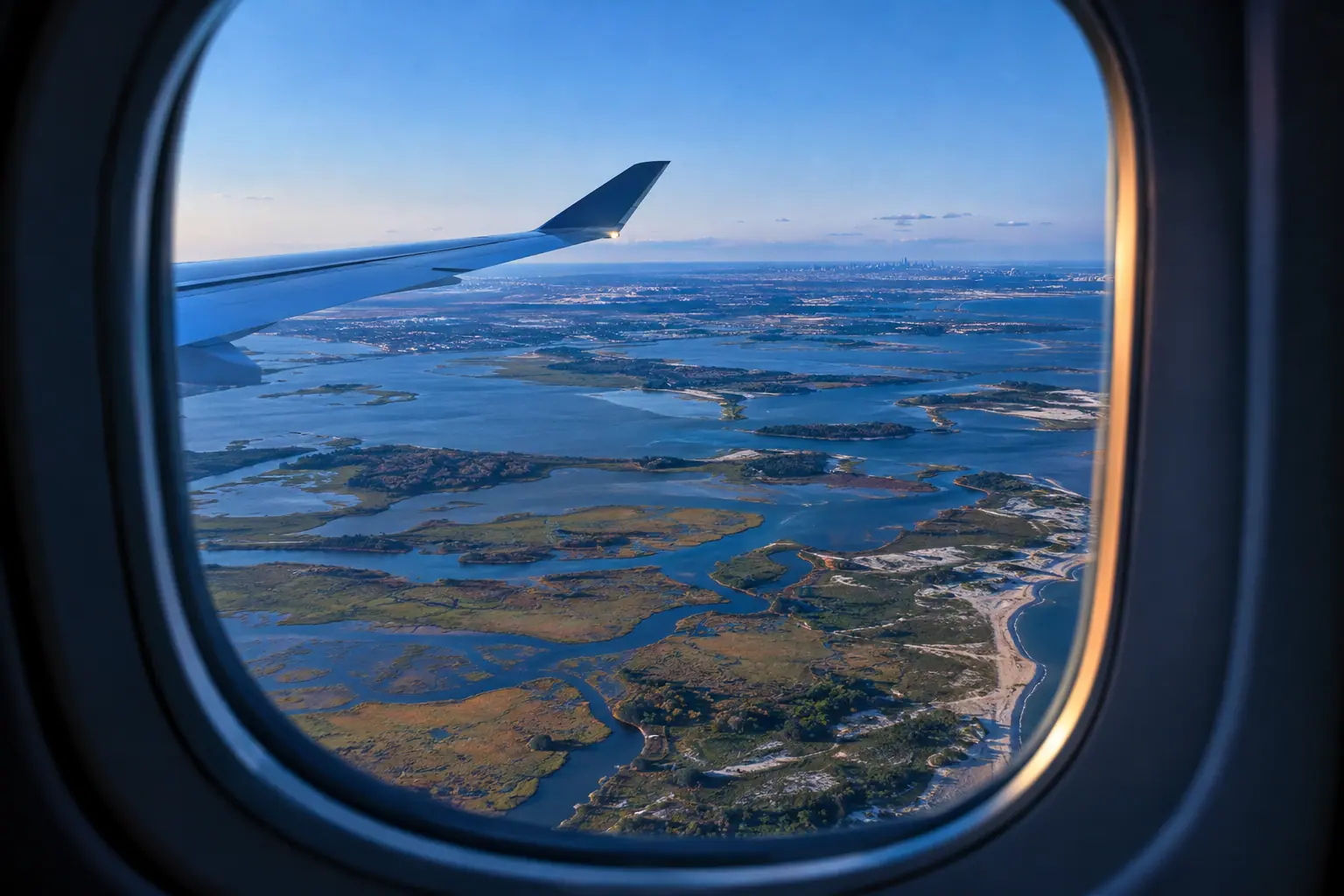
Leaving New York
Teterboro is the usual departure point, with a 6,997-foot runway and a short run to the Hudson. LaGuardia's 7,002-foot runway puts Manhattan travelers closer to the ramp, while Newark's 11,000-foot strip handles larger aircraft. Morristown suits northern New Jersey departures. Surface traffic, not the flight, sets your morning. If you leave Teterboro between 7 and 9 a.m. on a weekday, then allow extra margin for the George Washington Bridge and tunnel approaches.
Arriving in Boston
Hanscom Field in Bedford is the civilian relief airport for Boston, with a 7,011-foot runway and a low-traffic ramp. Hanscom gets you from the aircraft to Route 95 and into Cambridge in a fraction of the Logan walk. Logan itself has a 10,083-foot runway and the airline terminal volume you would expect; private handling there is workable but slower on the ground. If your meeting is downtown or in the Seaport, then Logan can win on total time despite the congestion.
| Airport | Code | Runway |
|---|---|---|
| Laurence G Hanscom Field | KBED / BED | 7,011 ft |
| Boston Logan International Airport | KBOS / BOS | 10,083 ft |
| Teterboro Airport | KTEB / TEB | 6,997 ft |
| Morristown Municipal Airport | KMMU / MMU | 5,998 ft |
| LaGuardia Airport | KLGA / LGA | 7,002 ft |
| Newark Liberty International Airport | KEWR / EWR | 11,000 ft |
When this route is busiest
Weekday mornings toward Boston and Thursday or Friday afternoons back to New York carry the heaviest demand, driven by finance, consulting and university business. Book at least 48 hours ahead if your trip falls on a Monday morning in Boston, because aircraft and crews cluster where the money is and repositioning costs land in your quote. Same-day round trips are common here; the aircraft waits, and the wait is billed as crew time.
Summer adds heat and afternoon thunderstorms, which can slow the turboprops more than the jets. Fall brings parents' weekends and alumni events, and graduation season in May fills Boston ramps quickly. Around the Boston Marathon and major conventions, hotel and hangar space tighten together. If you can shift a departure by two hours, then you often avoid both the peak pricing and the weather window.
Other legs like New York to Boston
The 6 city pairs here span 183 to 2,129 nautical miles, with one-way turboprop estimates between $2,000 and $30,000.
Questions on this leg
What does private jet charter New York to Boston cost?
Estimates run from $4,000 to $6,000 for a light jet one way, and roughly $2,000 to $3,500 for a turboprop. Midsize aircraft fall between $5,000 and $8,000, super-midsize between $7,000 and $10,000, and heavy jets $9,500 to $14,500. These are planning ranges, not fixed prices; the live quote depends on aircraft availability, crew time and whether the jet has to reposition.
How long is the flight from New York to Boston by private jet?
About 41 minutes by light or midsize jet, and roughly 39 minutes for super-midsize and heavy aircraft. A turboprop takes about 51 minutes. The distance is 158 nautical miles, or 182 statute miles. Add taxi and surface time at each end; the drive from Hanscom into Cambridge is a short hop on Route 95, while Logan sits closer to downtown but moves slower.
Which airports serve this route?
Departures use Teterboro, Morristown, LaGuardia or Newark. Arrivals use Hanscom Field in Bedford or Boston Logan. Teterboro has a 6,997-foot runway and Morristown 5,998 feet, both ample for this sector. Hanscom's 7,011-foot runway handles turboprops and jets comfortably. Logan's 10,083-foot runway accepts anything but comes with the airline terminal environment and longer ground handling.
Is a turboprop or a jet better for New York to Boston?
A turboprop is the practical choice for most trips. The King Air 350i seats 8 and the PC-12 NGX seats 6, both fly nonstop in about 51 minutes, and both cost less to operate than a jet. Choose a light jet if the ten-minute saving matters or you want a quieter cabin. Larger classes add comfort and baggage space but almost no speed on a 158-nautical-mile leg.
Can I do a same-day round trip?
Yes, and it is common. The flight itself takes under an hour each way, so a morning departure and an afternoon return fits comfortably in a business day. The aircraft and crew typically wait in Boston, and that waiting time is billed as crew duty. Booking both legs together usually produces a better combined estimate than arranging them separately, since the operator can plan one continuous duty period.
Who arranges the flight and who operates it?
We act as your charter broker and agent, matching your trip to FAA Part 135 operators who hold operational control and crew the aircraft. We do not own aircraft. Under DOT Part 295 rules, brokers arrange transportation rather than provide it, and the operating certificate holder remains responsible for the flight. Ask for the operator's name before you book; a reputable broker provides it without hesitation.